High clock performance
5GHz+ CPUs keep gameplay responsive when your server is busy.

Evolution Host
Invent the Future
Spin up a Hytale server built for community worlds: quick deployment, low-latency routing, and hardware tuned for responsive simulation, exploration, and modded adventures.
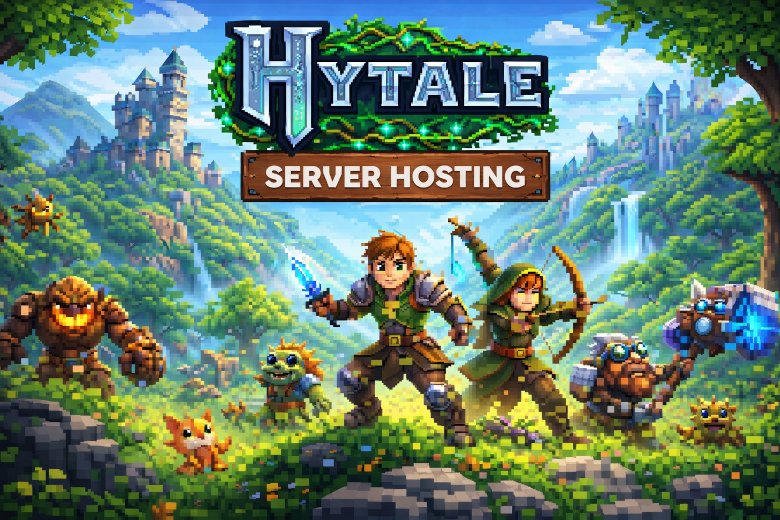
Responsive simulation, fast save/load, and consistent network performance - designed for community hubs, adventure runs and modded servers.
5GHz+ CPUs keep gameplay responsive when your server is busy.
Snappier saves, quicker restarts, and smoother asset loading.
Keep your server online and running smoothly even when under attack.
Optimized routing and locations close to your community.
Restart, manage files, and stay organized without hassle.
Reduced download times for players joining your world.

🔥 Hytale server files were released on January 13, 2026. Deploy your server now to be an early adopter.
Pick a tier that matches your server style - community hubs, adventure sessions, or mod-heavy worlds.
All tiers include NVMe storage, standard protection, and instant setup.
Small worlds & early experiments
Survival worlds & light mods
Active communities & custom content
Mod-heavy servers & multiple zones
Large persistent worlds & plugins
Massive worlds & long-running communities
Capacity estimates assume a typical mix of exploration, building, and light-to-moderate mods. World size, automation, and plugin/mod complexity can shift real-world results.

What matters for community worlds: consistent responsiveness, quick restarts, reliable networking and DDoS protection to eliminate attacks.
Ultra fast CPUs help keep movement and interactions feeling snappy.
NVMe helps reduce downtime when you update, reboot, or switch worlds.
Mitigation designed to maintain access while filtering unwanted traffic.
A hosting stack designed for smooth multiplayer sessions - steady performance, fast storage, and reliable routing.
Hytale is a sandbox adventure RPG released by Hypixel Studios where creative building meets exploration, combat, and deep world-driven progression - designed to be played solo or with friends in shared worlds.
At its core, Hytale blends the freedom of block-building with the structure of an RPG. Players explore the world of Orbis, travel through distinct biomes, uncover dungeons, and battle creatures - while also having the tools to build anything from simple homes to massive cities.
One of Hytale’s biggest goals is giving creators more control. Alongside the adventure mode, the game is being developed with powerful creative tooling in mind - allowing custom experiences, mini-games, and modifications that can reshape how a world plays.
Hytale was revealed by Hypixel Studios, a team formed from the creators behind the Hypixel community. The announcement quickly gained attention because it promised a “best of both worlds” approach: open-ended building, but with richer combat, progression, and world content.
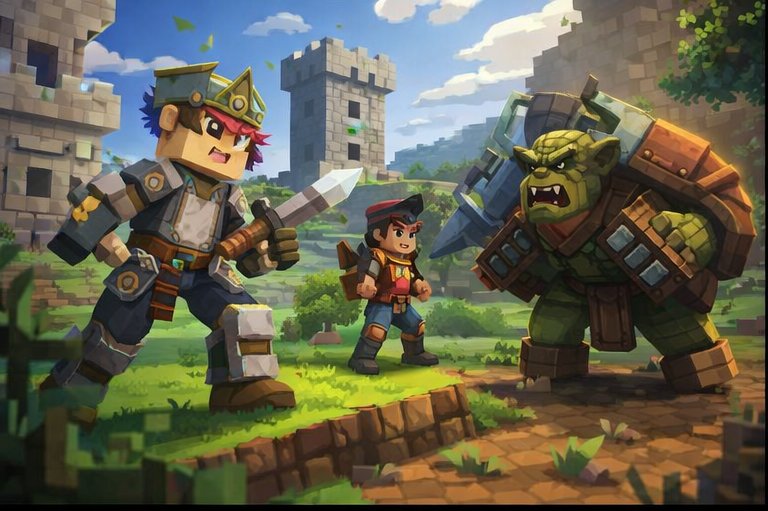
Hytale servers are about community play: shared worlds, custom rules, and content changes over time. Good hosting prioritizes consistent responsiveness, fast world I/O, and reliable routing.
Hytale server hosting is game server infrastructure tuned for persistent multiplayer worlds. Instead of treating your server like a generic compute instance, the goal is to keep the core loop feeling smooth: stable performance when players gather, quick restarts when you update content, and low-latency networking for real-time play.
As worlds evolve - more structures, more events, more mods - the server can shift from “light” to “busy” quickly. That’s why CPU clock and storage latency matter: they influence how responsive the server feels during peak moments and how quickly data is read/written when players are active.
Hytale has been shaped by a long development arc. For server owners, the takeaway is simple: when a community gathers, you want performance that stays consistent and predictable.
Hytale sits at the intersection of sandbox building and RPG-style exploration. That mix tends to produce servers that evolve quickly: new worlds, new rules, new content, and communities that grow from a handful of friends into busy hubs.
As your server becomes more ambitious, the demands change. Persistence, world data, and event logic put pressure on CPU and storage, while busy public servers benefit from reliable routing and strong DDoS protection.
Whether you’re running a casual adventure server or a long-lived community world, the hosting fundamentals don’t change: keep the experience responsive, keep updates painless, and keep the server reachable.
Common questions about performance, setup, modded worlds, protection, and picking the right plan for your community.
Hytale server hosting is managed infrastructure for running multiplayer Hytale worlds. It focuses on consistent responsiveness, fast storage for world data, low-latency routing, and mitigation options to keep your server accessible.
CPU clock and RAM headroom are the main drivers for “how it feels” when players are active. NVMe storage helps with world saves, updates, and restarts. Good routing matters for public servers spread across locations.
Yes. Mods that add automation, complex systems, or heavy world changes can increase CPU/RAM usage. For mod-heavy servers, choose a plan with extra headroom and test changes before rolling them into a live world.
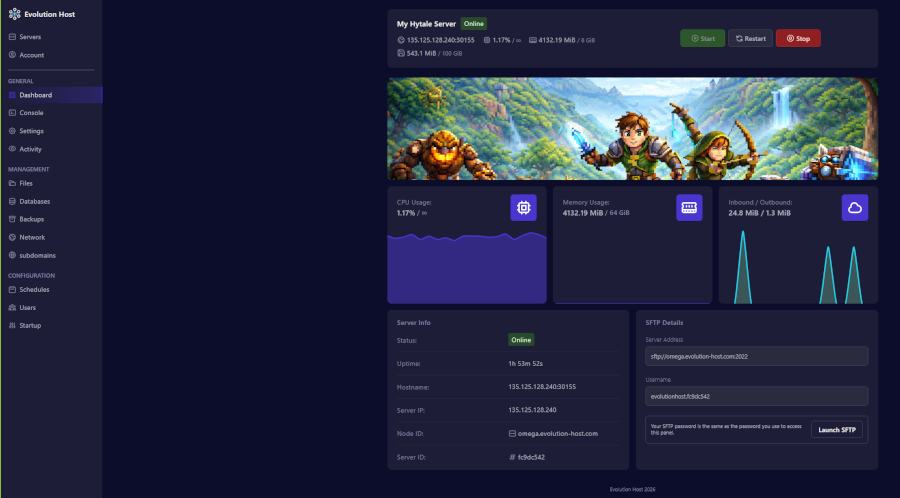
Deployment is designed to be quick. Once provisioned, you can upload files, adjust settings, and open the server to your players.
All of our Hytale Hosting plans include purpose build DDoS protection designed to keep your players connected while eliminating disruption from attacks.
Yes. A typical move is: export your world files, upload them to your new server, then validate settings and test before reopening to players.
Player capacity depends on server activity, world complexity, mods, and how many systems are running simultaneously. For public hubs, it’s best to size for peak activity and leave headroom for events.
Common causes include CPU saturation (too much logic at once), memory pressure from mods, slow storage for frequent saves/loads, and poor routing for far-away players. Good hosting helps, but mod hygiene and testing matter too.
Yes. Many communities run multiple world types (adventure, creative, event world). If you need additional world slots, you can add them during configuration.
You can add automated backups during checkout. For larger communities, a good practice is multiple restore points and periodic “offsite” downloads.
Hosted game servers are ideal if you want a simpler management experience with quick setup. VPS/VDS is better if you need custom services, multiple game instances, or a more hands-on stack. Learn about Hytale VPS Hosting.
Yes. Many servers start small and scale up as the community grows. When you see regular peak activity, moving to a higher tier helps keep gameplay smooth.
Deploy in minutes with NVMe storage, responsive compute tiers, and reliable routing - built for communities that plan to grow.